
Evanston Resident Records by Era
The best source depends on the date and whether the question concerns title, the building, or the people inside it. Evanston has an unusually strong local chain: county recordings, annual directories, released census schedules, newspaper runs, History Center house files, and Sanborn maps. Access may be online, in a reading room, by remote reference, or through a paid copy request.
| Source | Years covered | Where held | What it shows |
|---|---|---|---|
| Cook Clerk recording index | Online cutoff not officially stated | Clerk portal and public research area | Recorded parties, dates, document type, legal description |
| Evanston city directories | 1879 onward at EPL; runs have gaps | EPL, EHC, Northwestern and other repositories | Dated names, addresses, household and work details |
| Telephone directories | 1926 to present as EHC lists | EHC Research Room | Name, address, and phone-era trail |
| Federal census | Released schedules under the 72-year rule | NARA and library databases | Household snapshot at enumeration |
| Sanborn maps | 1920 through December 1945 LOC series | Library of Congress | Building footprint and use, not owner |
| EHC house files | Varies by property | 225 Greenwood Street | City records, listings, maps, building notes |
| Cook probate index | 1871 to 1935 index located | IRAD and Circuit Clerk archives | Estate lead, heirs, case reference |
Begin with the newest firm date. Move backward through deeds for owners and through annual sources for past residents. Where a year is missing, use a nearby directory, released census, newspaper, permit, house file, or probate index as a bridge.
Fix Evanston Address Records First
Before searching old names, save the current street number, direction, unit, suffix, city label, PIN, parcel shape, and any legal description. The PIN is a 14-digit county parcel key. It remains useful when a street abbreviation or postal label changes. A legal description identifies the land through lot, block, subdivision, or other recorded terms and is often stronger than the street address for matching old deeds.
Compare CookViewer with the Evanston City Boundary and local parcel layers. The Assessor's property location is a situs, meaning the displayed physical location, and the agency warns that it is not a legal or postal mailing address. Do not treat an owner's mailing destination as proof that the owner occupied the house.
- Grantor
- The party transferring a recorded interest.
- Grantee
- The party receiving that interest.
- Chain of title
- The linked sequence of transfers for the same property.
- Legal description
- The recorded land identity used to confirm parcel continuity.
- Enumeration district
- A census taker's assigned geographic area, useful when an address index fails.
Reverse Evanston Resident Deed Records
Start with today's assessed parcel and locate the current owner's purchase document in the Cook County Clerk's recording index. Read the result as an index, not as proof of every fact in the underlying instrument. Official interface examples show grantor, grantee, document type, recorded date, document number, legal description, and instrument date. A full title conclusion may require the actual document and professional help.
- Record the current PIN, owner display, parcel, and legal description from county sources.
- Find the current purchase deed and confirm that its legal description matches the parcel.
- Take the seller, the grantor, and search that person or entity as an earlier grantee.
- Repeat backward, recording each date, document number, party role, and land description.
- When the online trail stops, contact the Clerk's research area for index books, tract books, plats, or microfilm, and ask archives or IRAD about older series.
A mortgage, release, lien, easement, or judgment is not a sale. Document type matters. So does parcel continuity after a subdivision, condominium creation, or lot combination.
Read Evanston Recording Search Fields
The old Recorder of Deeds name remains in many historical instructions, but its functions moved to the Cook County Clerk on December 7, 2020. The current portal supports a basic word or phrase search with AND as the default and an OR option. More Options includes advanced word, full-name, image-text, and advanced image-text searches. Filters include document groups, party type, and recorded-date range. Full-name search can narrow a party to grantor or grantee.
The exact online coverage cutoff was not found in an official source, and image access should not be assumed. The Cook recording-search help documents the interface used for a backward deed search.
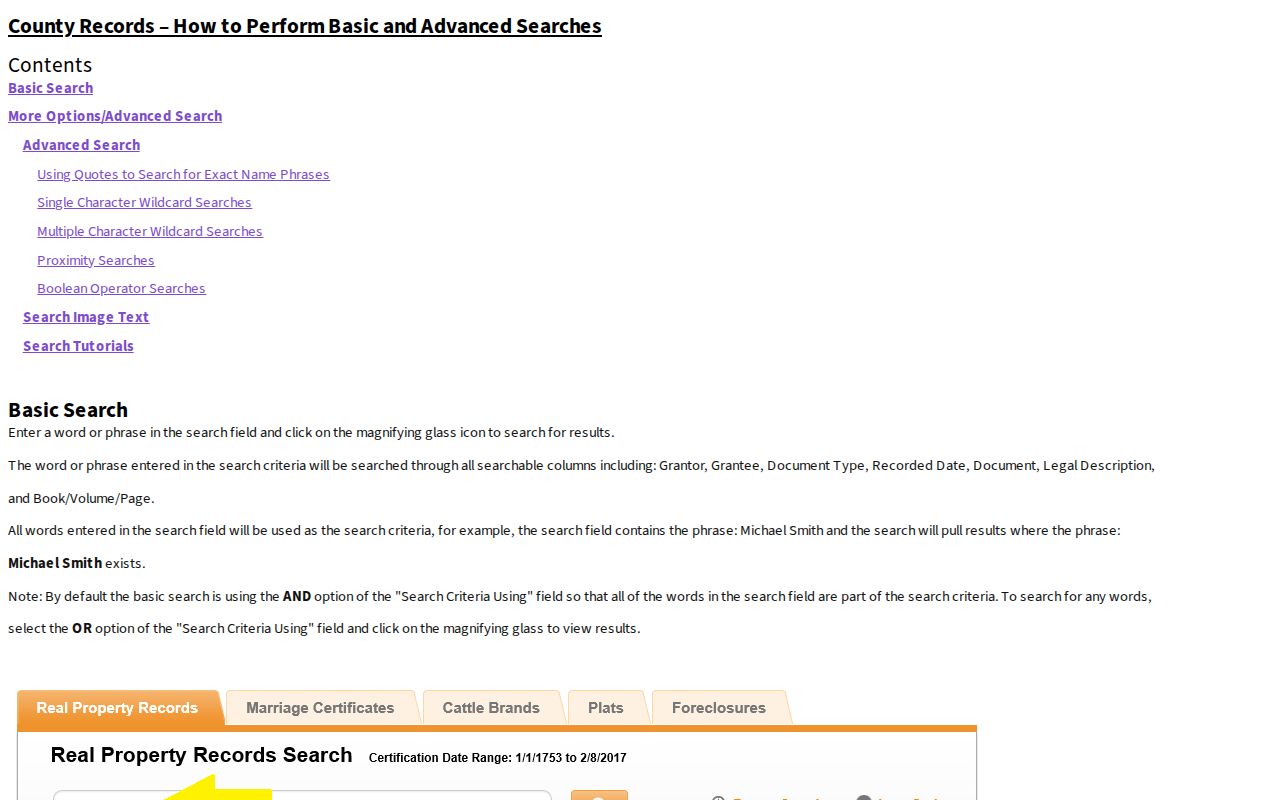
The capture provides a field map, not an Evanston title finding. Search the Clerk index online, then use phone help, the public research area at 118 N. Clark Street, mail or electronic inquiry, and paid copy service as needed.
Evanston Resident House Files
The Evanston History Center describes house files for every Evanston house and some commercial structures. A file can include city records, real-estate listings, maps, photographs, and building-history notes that reconnect an address across time. It may reveal alteration dates or former labels, but its contents should still be cited by source and date.
EHC's Research Room is at 225 Greenwood Street. Published hours are Tuesday, Wednesday, Thursday, and Saturday from 1:00 to 4:00, with $5 admission and members free. Contact the center before relying on hours or assuming a file has been digitized. The archive began with an early record book rescued from a dustbin in 1898 and now exceeds 100,000 artifacts, a local story that explains both its depth and its varied formats.
The Evanston History Center collections provide the house-file and map route. EPL staff can also help with remote local-history questions, though a service or copy fee may apply and fragile or copyrighted items may have limits.
Evanston Resident Maps Date Buildings
The Library of Congress holds a 121-sheet Evanston Sanborn fire-insurance series covering 1920 through December 1945. Sanborn sheets can show a building footprint, construction clues, additions, use, and nearby structures at the map's date. They do not identify the owner and should not be treated as a deed.
Open the Evanston Sanborn map series and locate the address or its historical equivalent. Compare its footprint with permits, a city directory year, and the EHC house file. No official pre-1920 Evanston Sanborn run was established in the research, so do not infer that an earlier map exists at this link.
A map date can narrow a change to a span. A dated permit or newspaper item may then identify when the work occurred. This is building history, not automatic evidence of who occupied the rooms.
Pair Evanston Directories With Census
City directories fill many annual gaps between census schedules. EPL's local-history collection begins in 1879, while physical and microfilm runs at EPL, Northwestern, EHC, and other repositories contain missing years. The 1899 digitized directory records surname, given name or initial, spouse or household notes where supplied, address, phone, and occupation or business details. Publisher terms and OCR must be checked against the page image.
- Copy the exact directory year, page, spelling, address, phone, role, and abbreviations.
- Check adjacent years for a move, changed initials, widow notation, or business shift.
- Pair the address with the nearest released census, allowing for the different survey dates.
- Search by enumeration district if a census address index fails, then compare household members.
- Return to the next annual directory and use newspapers, yearbooks, deeds, or house files to test the match.
The 1890 federal census was destroyed in a 1921 fire. That is a national gap, not an Evanston courthouse loss. Use the 1880 and 1900 census with local directory years between them. Full collection runs and reading methods belong on the Evanston city directory page.
Evanston Resident Address Boundaries
Evanston annexation history includes changes in 1873, 1874, 1886, and 1892. A historic directory can therefore use a different town or district label for land now treated as Evanston. No comprehensive official street-renumbering or renaming table was located. Search the number and name with old abbreviations, then compare city maps, the EHC house file, Cook parcel data, and a recorded legal description.
ZIP geography adds a modern trap. A postal Evanston label does not always settle whether a parcel lies inside the city. Northwestern's unique postal destinations also do not work as simple household zones. Overlay Cook ZIP polygons with the Evanston City Boundary, but use the PIN and legal description to follow land.
Evanston Notices Close the Timeline
Local newspapers can connect a person, event, and date when deeds or directories leave a gap. EPL lists the Evanston Index from 1872 to 1914, Evanston Press from 1889 to 1914, Evanston Review from 1925 to 2009 and 1995 to current, plus other local runs. A death notice may lead to probate. A building notice may point to a permit. Copyright and database access vary, and a newspaper item is not a certified public record.
Cook IRAD holdings include a Probate Case Files Index for 1871 through 1935, along with probate, guardian, administrator, naturalization, land, tax, and other series. Search the Illinois local-government holdings database, save the record-series title, year, accession, and depository, then ask about copies or a visit. Cook County's Historic Archives currently reports no public visits but accepts remote reference inquiries. The Circuit Clerk archives and NEIU IRAD supply other fallback paths.
Confirm Evanston Previous Residents Carefully
Owners form only one part of an address history. A dated directory or census can support the occupant side, including people who did not own the parcel. Obituaries, probate files, school records, phone books, and newspapers may corroborate the link. They can also refer to a business, church, campus office, or other institution rather than a home, so read the role and address in context.
A strong finding states exactly what the source proves: a person was listed at an address in a certain directory year, was enumerated in a census household, appeared as a recorded party, or was named in a dated notice. Do not merge those facts into a claim of continuous residence. The safe process preserves conflicting spellings and gaps instead of smoothing them away.
Lawful use. Research previous residents for house history, family history, or estate work, and never use personal details to stalk, harass, or harm a living person.